

Wall murals and wallpaper can both completely change the appearance of a room, but they create very different visual effects. Traditional wallpaper typically uses a repeating pattern or texture, while a mural is designed as one large composition that extends across the wall. Modern peel and stick wall murals make this type of statement design more accessible, allowing homeowners to introduce landscapes, botanical scenes, abstract artwork, or other large-scale imagery without relying on paint or a permanent hand-painted installation.
The right choice depends on the size of the room, the atmosphere you want to create, how much visual attention the wall should attract, and whether you prefer a repeating design or one continuous image. Understanding these differences can make it much easier to decide between wallpaper and a wall mural.
What Is a Wall Mural?
A wall mural is essentially a large image or design created to cover a significant portion of a wall. Instead of repeating the same motif at regular intervals, individual mural panels work together to form one complete composition.
The design might feature mountains, forests, flowers, underwater scenes, architectural elements, abstract shapes, watercolor effects, or oversized botanical illustrations.
Because the image operates on a much larger scale than a conventional wallpaper pattern, a mural often becomes the main visual feature of the room.
This makes murals particularly effective on large uninterrupted walls, behind beds and sofas, in dining areas, or anywhere you want to create a focal point.
How Is Wallpaper Different?
Wallpaper usually relies on repetition.
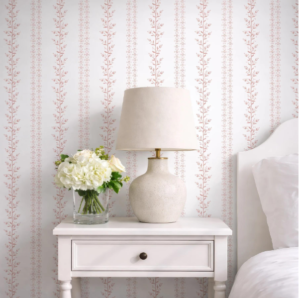
A floral branch, geometric shape, stripe, texture, or other motif repeats across the wall so that the design can continue over virtually any surface width.
This gives wallpaper considerable flexibility. It can cover a single accent wall, all four walls of a room, a hallway, a small niche, or even selected architectural features.
Wallpaper can also be much quieter visually than a mural. A subtle linen texture, small botanical pattern, or soft geometric design can function almost as a background rather than becoming the dominant decorative feature.
The distinction can be summarized simply: wallpaper generally creates a pattern, while a mural creates a scene or composition.
Wall Murals Create a Stronger Focal Point
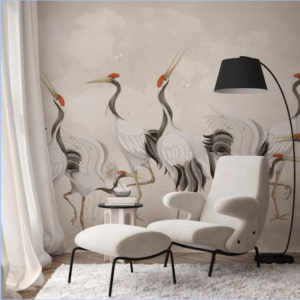
One of the main reasons to choose a mural is visual impact.
Imagine a bedroom with relatively simple furniture and neutral bedding. Adding a large botanical or landscape mural behind the bed can immediately establish the room’s entire design direction.
The same principle works in a living room. A mural behind the sofa can perform a similar role to oversized artwork while covering a much larger surface.
This can be useful when a room feels visually empty or lacks architectural character.
Instead of introducing several small decorative elements, one carefully chosen mural can provide color, depth, movement, and personality at the same time.
Wallpaper can certainly become a focal point as well, especially when using bold patterns. However, the repetition usually produces a more consistent rhythm rather than the cinematic effect of one large image.
Wallpaper Is Better for Continuous Design
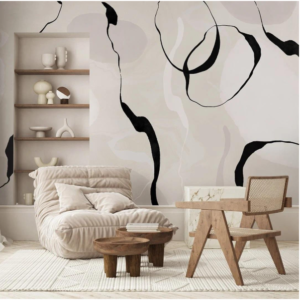
If you want the decorative treatment to continue around the entire room, wallpaper is often easier to work with.
Repeating patterns are designed to connect from one section to another. This makes them suitable for wrapping multiple walls while maintaining visual consistency.
A mural has a defined composition. Extending that image around corners or across several unrelated surfaces may interrupt the intended design.
For this reason, murals are most commonly used on one main wall, while wallpaper can work equally well as an accent or as a full-room treatment.
This isn’t a strict rule, but it is a useful starting point when deciding between the two.
Which Option Works Better in Small Rooms?
There is a common assumption that murals only work in large rooms. In reality, scale and design matter more than square footage.
A mural with perspective—such as a landscape, misty forest, or distant horizon—can visually add depth to a smaller space. Designs with lighter backgrounds can also keep the room from feeling enclosed.
However, extremely detailed or high-contrast imagery may become overwhelming when viewed from a very short distance.
Wallpaper provides another solution for compact rooms. Small-scale patterns, soft textures, and low-contrast designs can introduce character without visually dominating the space.
In powder rooms, small bedrooms, entryways, and compact offices, both approaches can work. The important question is whether you want the walls to function as a background or become the primary feature.
Choosing the Right Design for a Large Room
Large rooms provide more freedom, but they also create a different problem: an expansive blank wall can feel unfinished.
Murals are particularly effective in these situations.
Large-scale botanical illustrations, landscapes, abstract compositions, or architectural imagery can occupy the wall naturally without requiring a gallery of smaller decorative objects.
In an open-plan living space, a mural can also help visually define one functional zone. For example, it can establish the dining area within a larger living-and-dining room.
Wallpaper can achieve a similar zoning effect, but usually in a more understated way.
When choosing either option, consider the viewing distance. A design that looks dramatic in a small sample may appear completely different when expanded across a wide wall and viewed from several feet away.
Pattern Scale Matters
Whether you choose wallpaper or a mural, scale is one of the most important design considerations.
Small repeating motifs tend to create texture and visual rhythm. Larger motifs attract more attention and can make the wall feel more expressive.
Murals operate at an even larger scale. A single flower, tree, arch, or abstract form may occupy a significant portion of the wall.
Before making a decision, think about how the room is normally viewed. Where will people stand or sit? Will furniture cover an important part of the design? Where is the natural focal point?
A beautiful mural can lose much of its effect if the central element disappears behind a tall headboard or shelving unit.
Planning the relationship between the wall design and furniture is therefore particularly important with large-scale imagery.
Custom Peel and Stick Wallpaper for More Flexibility
There is also a middle ground between selecting a standard repeating pattern and committing to a fixed mural composition.
With custom peel and stick wallpaper, homeowners can explore a broad range of designs while choosing a removable format that is easier to integrate into different interior projects. This can be particularly useful when you want wallpaper to feel tailored to a specific room but still value the flexibility of a peel-and-stick application.
A removable format can also make sense when decorating a rental property, updating a child’s room, creating a temporary home office, or simply experimenting with a stronger design choice.
Instead of treating wall decor as something that must remain unchanged for many years, peel-and-stick materials allow the interior to evolve more easily.
Which Is Easier to Install?
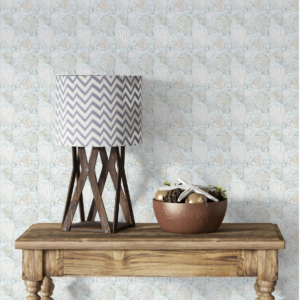
Installation depends heavily on the wallpaper material, wall condition, and size of the project.
With peel-and-stick products, panels are generally positioned on a clean, smooth surface and applied gradually while being smoothed to minimize trapped air and wrinkles.
Wallpaper with a repeating pattern requires careful alignment between adjacent panels. With a mural, alignment is equally important because every panel forms part of one continuous image.
The difference is that a small alignment error in repeating wallpaper may affect the pattern match, while an error in a mural can interrupt the larger composition.
Accurate wall measurements and careful planning are therefore important for both options.
Before installation, the wall should also be properly prepared. Dust, dirt, uneven texture, peeling paint, and surface imperfections can affect the final result.
What About Removal and Future Redecorating?
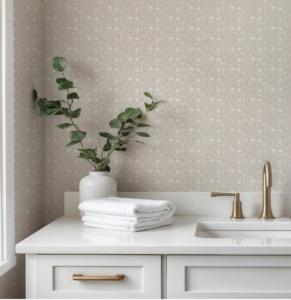
Traditional interior design decisions often involved a significant commitment. Modern removable wall coverings offer more flexibility.
A peel-and-stick mural can be particularly attractive when you want a dramatic transformation without treating it as a permanent architectural feature.
The same applies to removable wallpaper.
This is useful for people who enjoy changing their interiors, renters where permitted, growing families whose rooms evolve over time, or homeowners who simply don’t want today’s design choice to determine how a room looks many years from now.
Always follow the manufacturer’s installation and removal instructions, since performance can vary depending on the wall surface and material.
Wall Mural or Wallpaper for a Bedroom?
Bedrooms can accommodate either option very well.
A mural behind the bed creates an obvious focal point and can replace the need for large artwork. Botanical scenes, abstract designs, landscapes, and softer nature-inspired imagery are particularly suitable when you want the room to feel immersive.
Wallpaper is a better choice if you want visual continuity.
A subtle pattern can cover all four walls without making the bed wall feel separate from the rest of the space. Alternatively, a bold wallpaper can still be limited to the headboard wall.
Consider the bedding when making your choice. If the wall design is complex, simpler textiles can prevent visual competition. If the wallpaper is understated, bedding and accessories can carry more pattern and color.
What Works Best in a Living Room?
Start by identifying the natural focal point.
In many living rooms, this is the wall behind the sofa, fireplace, television area, or main console.
If the wall is large and relatively unobstructed, a mural can create impressive visual depth. If the room already contains substantial artwork, shelving, patterned textiles, and decorative objects, conventional wallpaper may provide a calmer background.
You should also consider how long you spend in the space.
A highly detailed design that looks exciting at first glance may feel visually busy when seen every day. Choosing the right level of contrast is just as important as selecting the subject itself.
Using Murals and Wallpaper in Kids’ Rooms
Children’s rooms are particularly well suited to imaginative wall treatments.
A mural can transform a simple room into a forest, ocean, mountain landscape, or whimsical illustrated environment. Because the image occupies such a large surface, it can establish a theme without requiring many additional decorations.
Repeating wallpaper offers a different advantage. Stars, animals, plants, geometric motifs, or other playful patterns can create interest throughout the room without making one wall the only visual focus.
Removable materials are particularly practical here because children’s interests and room designs naturally change as they grow.
How to Decide Between a Wall Mural and Wallpaper
Begin with one question: What role should the wall play in the room?
If you want the wall to function almost like a piece of oversized artwork, a mural is usually the stronger choice.
If you want color, pattern, or texture to support the rest of the interior, wallpaper may be more appropriate.
Then consider the practical details: room size, wall dimensions, furniture placement, natural light, existing colors, installation, and how likely you are to redesign the space in the future.
There is no universal rule that murals are more dramatic and wallpaper must always be subtle. Bold repeating wallpaper can be extremely expressive, while a softly colored mural can create a quiet background.
The difference is primarily in how the design is structured across the wall.
Final Thoughts
Wall murals and wallpaper offer two different approaches to transforming a room. A mural creates one large visual composition and works particularly well when you want a defined focal point. Wallpaper uses repetition to create continuity, making it highly versatile for accent walls as well as complete room designs.
If you’re deciding which approach suits your space, explore the wall mural and wallpaper collections from CostaCover and compare different scales, colors, and styles. Seeing how each type of design interacts with your existing furniture and room proportions can make the final choice much easier.